Tag: Mental Preparation

  • The Kind of Love I Actually Want (And Why It’s Not About Money)

    The Kind of Love I Actually Want (And Why It’s Not About Money)

    A Small Moment That Made Me Think About.. Wait For it.. Love

    The other day it was my manager’s wife’s birthday.

    I asked him,
    “What are you planning to get her?”

    He looked at me with a straight face and said,

    “I’ve got something in mind.”

    Later that day, during lunch, he came back from Waterstones with a Pret sandwich and a thick Spanish cookbook.

    I didn’t even need to ask.

    I knew that was the gift.

    Not rushed.
    Not flashy.
    Just thoughtful.

    So I asked him another question.

    “Valentine’s is around the corner… you getting something for that too?”

    He laughed.

    “I’ve been with my partner for 11 years. We don’t do Valentine’s.”

    I smiled and carried on with my day.

    But that sentence stayed with me.

    Eleven years.

    And no pressure to perform love for one day in February.

    That’s the kind of love I want.


    Love That Doesn’t Need Proving

    I’ve always felt that Valentine’s Day can be a bit forced.

    A bit commercial.

    But I wouldn’t cancel it completely.

    If I’m honest, my ideal Valentine’s wouldn’t involve a packed restaurant or an overpriced tasting menu.

    It would be simple:

    • Cooking something together at home
    • A proper dinner indoors
    • A bottle of wine
    • A film we both enjoy
    • No phones

    That’s it.

    The idea of going out only really makes sense in the early stages of dating.

    When you’re still getting to know each other.
    When effort looks different.

    But long-term love feels calmer.

    More secure.

    Less about showing the world and more about being present with each other.


    The Kind of Love I Want Isn’t Measured in Money

    The kind of love I want wouldn’t be valued in money.

    It would be valued in time.

    I know that sounds cliché.

    But time is the only thing you can never get back.

    And if I’m honest, I’ve been thinking a lot lately about how much I stress over money.

    Career.
    Building something.
    Trying to level up.
    Wanting more.

    Sometimes I wonder if that mindset slowly turns relationships into something else.

    Instead of something you grow, it becomes something you calculate.

    Another cost to manage.

    That’s not healthy.

    Because when everything becomes a financial calculation, the emotional side of things slowly disappears.


    “Dating Is Too Expensive”

    The day before Valentine’s, I was at the barbers.

    Two weeks in — haircut day.

    By now I’ve built a proper friendship with the guys there.

    Same chair every time.
    Same conversations.

    Probably spent more money there than I realise over the years.

    My barber — who’s the same age as me — told me something interesting.

    He’s stopped dating.

    “It’s just expensive,” he said.

    I told him it doesn’t need to be.

    But he was convinced.

    “Girls don’t want to spend. The guy has to do everything.”

    We’re both Muslim — culturally more than religious — and we’ve noticed something recently.

    We seem to be attracting more traditional women.

    The kind where expectations are clear.

    The man provides.

    Different expectations.

    Different pressure.

    He’s decided that staying single — with the occasional fling — is easier.

    But that lifestyle has a time limit.

    You blink and suddenly you’re in your 40s wondering where the years went.

    Still chasing excitement that doesn’t hit the same anymore.

    And that part stuck with me.


    Money Matters — But It Shouldn’t Define Love

    I’m not naïve.

    Money matters.

    Dates cost money.
    Rent costs money.
    Life costs money.

    You can’t pretend it doesn’t.

    But love shouldn’t feel like a burden.

    It shouldn’t feel like a monthly subscription you’re struggling to afford.

    It should feel like two people building something together.

    Growing together.

    Supporting each other.

    Not one person carrying everything while the other consumes.

    There has to be balance.

    Because when the foundation of a relationship is only financial expectation, the relationship becomes transactional.

    And that’s not love.


    Maybe What I Actually Want Is Stability

    When my manager said “11 years” so casually, it made me realise something.

    I don’t want excitement every week.

    I want stability.

    I want:

    • Peace
    • Shared growth
    • Quiet evenings
    • Progress together
    • A relationship that feels safe

    Not loud love.

    Consistent love.

    The older I get, the more I realise peace is attractive.

    Drama might feel exciting at 22.

    But peace is rare at 34.

    And rare things are valuable.


    Time Over Money

    I’m still figuring life out.

    But I do know this:

    The kind of love I want isn’t about how much is spent.

    It’s about how much is invested.

    Not financially.

    Emotionally.

    Consistently.

    Over years.

    Money will always play a role in life — of course it will.

    But time is the real currency.

    Because once it’s gone, it’s gone.

    Maybe maturity is realising that love isn’t about performance.

    It’s about partnership.

    I’d rather build something that lasts 11 years

    Than impress someone for 11 months.
    Read my other blogs here and my medium page here

  • Christmas for a Non-Believer: Uncovering Meaning in Togetherness

    Christmas for a Non-Believer: Uncovering Meaning in Togetherness

    I’ve never been one to celebrate Christmas, but that’s more because of my upbringing as a Black Muslim than by personal choice. My dad, who was Muslim but not particularly religious, didn’t mind it. However, my mom, who became more devout after my dad’s passing, was against it. So, while I don’t celebrate it, I’ve always had a fondness for Christmas.

    The Allure of Togetherness

    Even though I don’t believe that Jesus was born on December 25th or in the obvious Santa Claus, I love the idea of “togetherness” that Christmas brings. That word gives me chills, as cheesy as it sounds, I know. I want the feeling of togetherness, even if its for a temporary time. Christmas (like any other festival) is a time when people come together, often travelling from afar, paying unreasonable amounts for flights just to be with family.

    The Reality of Christmas Belief

    I’ve rarely met anyone who genuinely believes in the religious aspect of Christmas. Most people seem to celebrate the idea of Christmas with a tree, gifts and a turkey rather than its religious roots. God knows why people put up Christmas trees, but I like the idea that people gather together to up gifts underneath it.

    Gifts with Thought and Meaning

    Who doesn’t love a present? However, the idea of an expensive gift seems pointless to me. I appreciate gifts that show thought and time – a photo, a journal with a bit of writing, a ticket to a theatre or concert. While I’d love an iPhone or a car (though who would gift a car?), a gift without thought is like offering me an oxygen tank when I can’t even scuba dive.

    Appreciating Christmas Beyond the Celebration

    So, what I’m trying to say is, appreciate Christmas because it’s more than just a celebration of Jesus’s birth (although there is just no way I believe that he was born on the 25th of December). It’s a time where people have the day off to enjoy it together, well unless you’re working and getting paid triple for choosing to work on Christmas.

    I find that during Christmas, people are the most wholesome I’ve genuinely ever seen. It’s a time when niceness comes out, where love might genuinely exist, and people smile with meaning, even though they’re bundled up to keep warm.

    Embracing the Spirit

    Christmas, for many, isn’t just about religious observance or extravagant gifts. It’s about togetherness, warmth, and creating memories with loved ones. So, although I’m not Christian, I truly do appreciate the beauty of the moments spent around people you love. The holiday season serves as a reminder to cherish the people around us and to spread kindness and love.

    Creating New Traditions

    As a non-believer, you might feel left out of traditional Christmas celebrations, but that doesn’t mean you can’t create your own traditions. Whether it’s a special meal, a movie night, or a day of volunteering, there are countless ways to make the holiday season meaningful. Here are a few ideas:

    • Host a Friendsmas: Gather your closest friends for a festive celebration. It can be a potluck dinner, a game night, or even a themed party.
    • Volunteer Together: Use this time to give back to the community. Volunteering at a local shelter, soup kitchen, or charity can bring a sense of fulfillment and togetherness.
    • Explore Nature: Take a hike, go for a walk in the park, or visit a nearby nature reserve. Spending time outdoors can be a great way to reflect and enjoy the season.
    • Cultural Experiences: Attend a concert, visit a museum, or explore a new cuisine. Embrace the diversity of your community and learn something new.
    • Personal Reflection: Use the holiday season for personal growth and reflection. Start a new journal, set goals for the coming year, or simply take some time for self-care.

    Addressing Common Questions

    Why do some people celebrate Christmas if they’re not religious?

    Christmas has evolved into a cultural holiday celebrated by many, regardless of religious beliefs. It’s a time for family, friends, and festivities, and the core values of love, kindness, and togetherness resonate with people from all walks of life.

    What’s the significance of the Christmas tree?

    The Christmas tree has pagan origins and was later incorporated into Christian traditions. It’s a symbol of life and renewal, often decorated to bring joy and light during the winter season.

    Are there other holidays that emphasise togetherness?

    Yes, many cultures have holidays that focus on bringing people together. For example, Diwali, Hanukkah, and Thanksgiving all emphasize family, community, and celebration.

    The Power of Simple Gestures

    During the holiday season, small gestures can make a big difference. Whether it’s a handwritten note, a homemade gift, or simply spending quality time with loved ones, the thought and effort behind these actions are what truly matter. Here are some ideas:

    • Handwritten Letters: Take the time to write heartfelt letters to friends and family. Expressing gratitude and sharing memories can strengthen your bonds.
    • Homemade Gifts: Crafting gifts yourself adds a personal touch. Whether it’s baked goods, handmade ornaments, or a custom playlist, these gifts show you care.
    • Quality Time: Sometimes, the best gift is your presence. Spend time with loved ones, engage in meaningful conversations, and create lasting memories together.

    Conclusion: Finding Your Own Meaning

    Christmas, for many, transcends its religious origins. It’s a time to celebrate love, kindness, and the joy of being together. If you don’t believe in Christmas, you can still embrace the spirit of the festivals and create your own traditions that reflect your values and beliefs.

    Whether it’s through hosting gatherings, volunteering, or simply spending time with loved ones, find what makes the season meaningful to you. The essence of Christmas lies in the connections we forge and the love we share.

    So, take what resonates with you from this reflection, and may your holiday season be filled with peace and love.

  • 5 Ways to Overcome Self-Doubt and Enjoy Your Backpacking Adventure

    5 Ways to Overcome Self-Doubt and Enjoy Your Backpacking Adventure

    “The biggest adventure you can take is to live the life of your dreams.” — Oprah Winfrey

    If you’re reading this, chances are you’re gearing up for a backpacking trip or dreaming about one. But let’s be real—self-doubt can creep in and make you question if you’re really cut out for this. Trust me, you’re not alone. Every traveller I met, from newbies to seasoned pros, faces those moments of hesitation and anxiety.

    Alright, so I watched this Ted on self-doubt which gave me the confidence to put this blog together, cause I would like to say that I still have issues with self-doubt especially when it comes to interviews and starting a trip solo but I am learning to improve on it. I’m going to  dive into how to recognise and tackle self-doubt, connect with other travellers, and embrace the challenges that come your way (even its not related to travelling).

    By the end, I’m hoping you’d get some confidence to guide you and possibly even discover not just new places, but a stronger, more confident you.

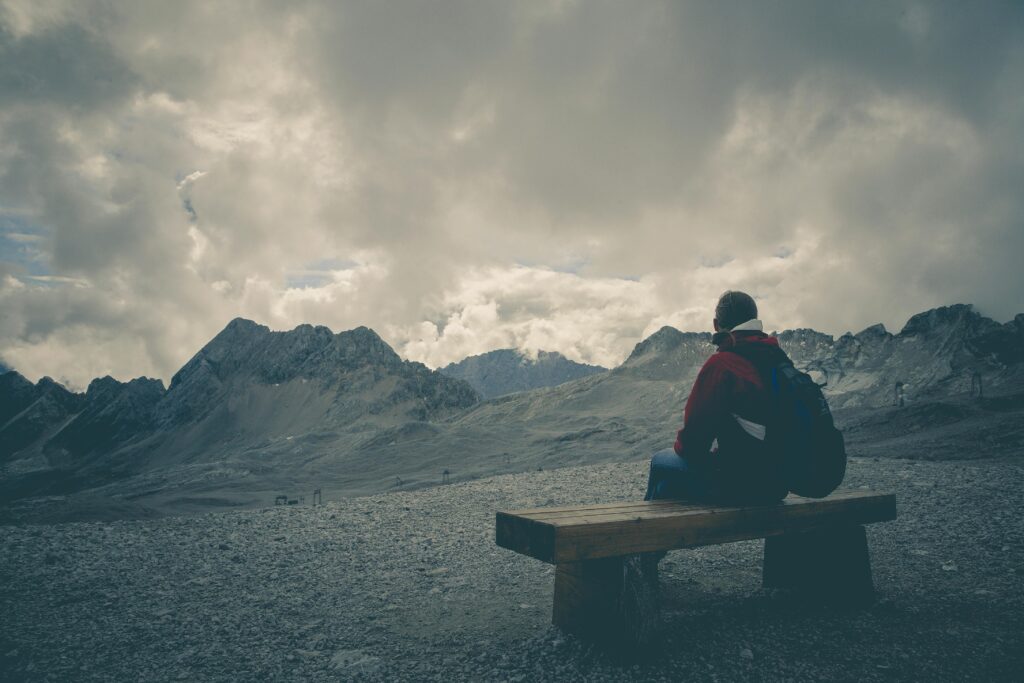
    A solitary traveler sits on a bench, gazing at a mountain range under a cloudy sky.

    1. Understanding Self-Doubt in Backpacking

    Let’s start with the basics and talk about the obvious: self-doubt. It’s that annoying voice in your head that makes you question if you can really do this. Trust me, you’re not alone. Every person I know and spoken to about this, no matter how experienced, has felt it.

    Self-doubt can come from all sides. Maybe it’s the fear of the unknown, like what the f*@K is around the next corner? Or maybe you’re worried because you’re not as experienced as you’d like to be. And let’s not forget about safety concerns—those can really mess with your head.

    The first step to any problem is to recognise it. Pay attention to those moments of hesitation, the anxiety creeping in, and the negative self-talk. Once you spot these signs, you can start dealing with them.

    Remember, self-doubt is just a part of life. It’s natural to feel it, especially when you’re pushing your limits. But understanding this can help you manage it better. So next time you’re out there, and that little voice starts whispering, tell it to take a hike or just take a hike.

    2. Preparing Mentally for Your Backpacking Journey

    Alright, let’s get real about getting your head in the game for any new change whether you’re learning a new skill or starting a solo adventure. Mental prep is just as important as packing your gear. I always start by setting some realistic expectations and goals. I wouldn’t dream of climb mount Everest when I’m struggling to run half a marathon—my plan is to always keep it doable and relatable.

    I always tell myself “picture yourself smashing those challenges” and yes I sometimes speak to myself in third person. I visualise the positive outcomes, I remember doing this 4 day hike called the Salkantay trek to Machu Pichu in Peru and rather just thinking of reaching there, I enjoyed the views I have and the breaks I took. It’s all about building that mental muscle.

    Before heading out, look to build a support network. Chat with friends or family or both if you’re fortunate enough about your plans and any worries you have. I kid you not when I say their encouragement was a massive confidence booster (although I’d never admit this to them). Plus, knowing you’ve got people rooting for you can make a world of difference when you’re out there.

    So, get your mind ready, share your journey with your crew, and remember: you’ve got this.

    3. Embracing the Challenges and Learning from Them

    Let’s be real—unless you’re getting an all inclusive, travelling in general isn’t always a smooth sailing. Challenges are going to come up, but they’re also out best teachers. Instead of seeing obstacles as setbacks, think of them as opportunities to grow and build resilience. The amount of times I got lost or got ripped off is uncountable, I guess that’s probably on me but its bound to happen especially when taxi drivers or store owners see you as a foreigner, or better as a victim.

    I met quite a handful of people in the morning whilst having my breakfast with a travel journal, so I decided to get one myself and not only have I found it to be a game-changer but also quite therapeutic. It helped me reflect on my experiences and track my progress. Plus, celebrating those small victories and milestones along the way can kept my mindset positive and my spirits high.

    4. Connecting with Fellow Travellers

    One of the best ways to is by connecting with other travellers, especially when you find out you guys have things in common and share the same humour (even better when they laugh at your jokes). Staying in Hostels, joining backpacking communities and forums to share your experiences and pick up some tips, one being Blackpacker (a community I’m building to help the BAME community start backpacking and having the confidence to do solo trips).

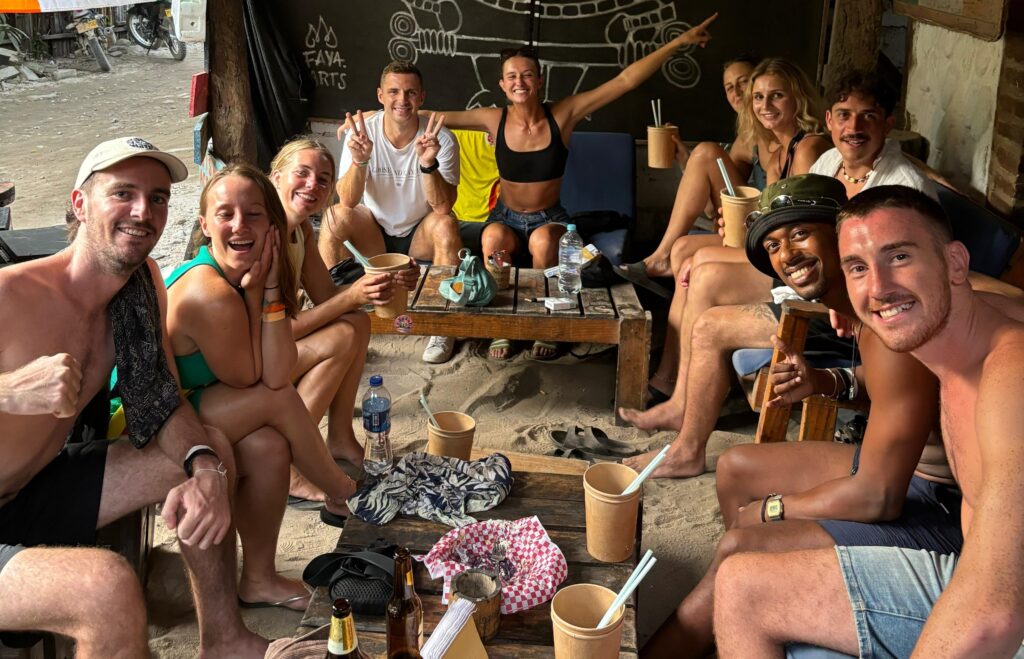
    Making friends on the road can give provide emotional support and practical advice. Honestly, some of my best mates right now I’ve met whilst staying in Hostels a few years ago I was in Barcelona solo and next year I’m going to his stag in Croatia and his wedding in Italy!

    So, don’t be shy about sharing feelings of self-doubt with those close to you; opening up can lighten the emotional load and help form deeper connections.

    5. Self-Care and Mindfulness Practices

    Taking care of oneself is key to managing self-doubt. Incorporate self-care and mindfulness practices into your routine. I honestly struggle to practice mindfulness and meditation on my own, so I’m currently using this app called Headspace which is helping guide me to stay grounded and present.

    Its easy to lose track of yourself when travelling, you get caught in the holiday so much that you end not looking after your physical health but its important to so but eating well, staying hydrated, and getting enough rest. Find moments of peace and relaxation, whether it’s through yoga, reading, or simply soaking in the beauty of nature or sunshine. These practices can rejuvenate your spirit and keep you cantered.

    Conclusion

    Backpacking isn’t just about ticking off new places on a map; nor discovering who you are cause wtf does that even mean, its all about enjoying it, being grateful that you’ve got the opportunity to do so and if you learn more about yourself then it’s a f*@king blessing.

    By tackling self-doubt and using even just one of strategies, you can turn your backpacking trip into an epic journey of self-learning and added confidence. Remember, every step you take is a step towards personal growth.

    So pack your bags, embrace the adventure, and believe in yourself.

    You’ve got this, peace & love.